
Raw powder / synthesis & purification
Bulk Raw Lyophilized Powder
1g–1kg supply for laboratory research, formulators and B2B repackers. High-purity powder, protected from production to delivery.
Manufacturing process
From amino acids to released lyophilized powder.
- 01
SPPS synthesis
Stepwise amino-acid coupling on a solid support, followed by cleavage and crude-peptide isolation.
- 02
Preparative HPLC
Chromatographic purification separates target peptide from process-related impurities; salt exchange sets the counterion specification.
- 03
Lyophilization
Controlled freezing and vacuum drying remove solvent while preserving a dry porous powder.
- 04
Analytical release
HPLC purity and MS identity are checked against the agreed batch specifications before barrier packing.
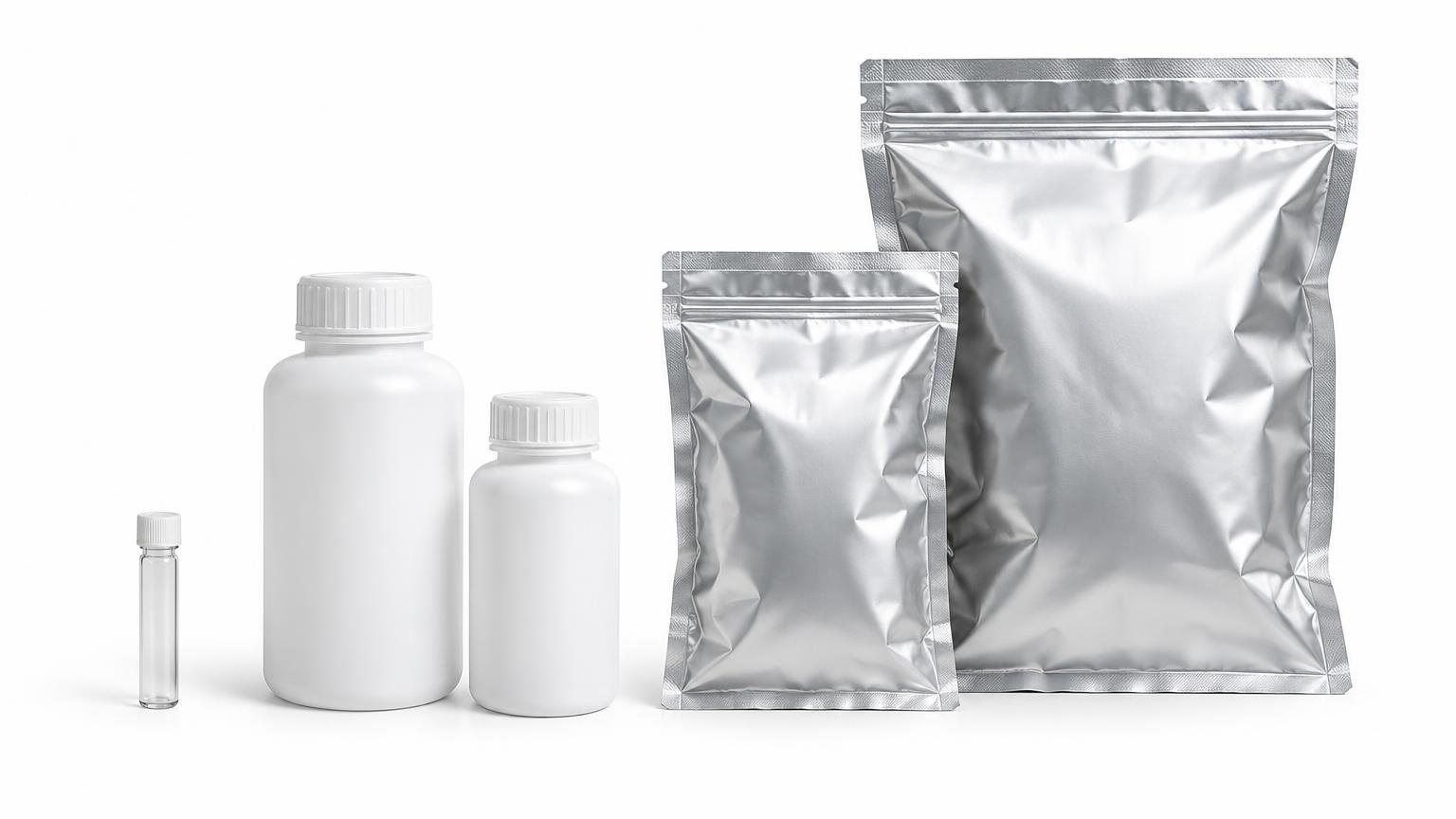
Illustrative packaging presentation. Final pack specifications confirmed in your quote.
Protected. Traceable. Scalable.
From gram-scale qualification to kilogram supply.
Acetate Salt & TFA-Free Standards
Request compound-specific counterion, residual TFA and analytical acceptance limits. Final specifications are confirmed on the batch COA.
Medical-Grade Aluminium Foil Bags
Vacuum-sealed barrier packaging protects against moisture and light; nitrogen-flushed packing supports lyophilized stability.
High-Purity Research Raw Materials
≥99.2% HPLC release specification for peptide compounds, with batch-specific HPLC/MS documentation and independent blind testing supported.
3-layer discreet packaging
Three barriers between your powder and the outside world.
01 · Inner layer
Anti-Static Sterile Bag
Direct powder contact; static-free and sterile.
02 · Middle layer
Vacuum-Sealed Foil Bag
High-barrier aluminium, vacuum sealed against moisture and light.
03 · Outer layer
Compliant Drum / Box
Plain, shock-proof outer carton or drum for compliant raw-material transit.
Salt form comparison
Acetate Salt vs. TFA-Free
Acetate describes the peptide's counterion. TFA-free describes an agreed residual-trifluoroacetic-acid specification, not a separate peptide identity or an automatic guarantee of absolute zero TFA. An acetate salt can also meet a TFA-free specification.
| Property | Acetate Salt | TFA-Free |
|---|---|---|
| Counterion | Acetate | Acetate or HCl, residual TFA limited |
| Appearance | White fluffy lyophilized powder | White lyophilized powder |
| Residual TFA | Reduced via salt exchange | Explicit limit on COA (e.g. ≤0.1%) |
| Best for | General formulation work | TFA-sensitive formulations & assays |
Typical values; compound-specific limits are confirmed on the batch COA.
Storage & moisture control
01 / Cold storage
−20°C
Keep lyophilized peptide powder sealed, dry and protected from light; follow the compound-specific COA.
02 / Before opening
Equilibrate
Let the unopened pack reach room temperature before opening to reduce condensation.
03 / After sampling
Reseal
Minimize humidity exposure and repeated freeze-thaw cycles. Use suitable laboratory handling procedures.
Packaging and stability are compound-specific. Final storage requirements and shelf life must be confirmed against the supplied batch documentation.
Explore compound-specific specifications.
Browse Catalog to Select FormCase studies & insights
Related from the RedcoBio blog

2026-06-04 · 7 min read
Acetate Salt vs. TFA-Free Raw Peptide Powder: A Technical Guide for Formulation Labs
Read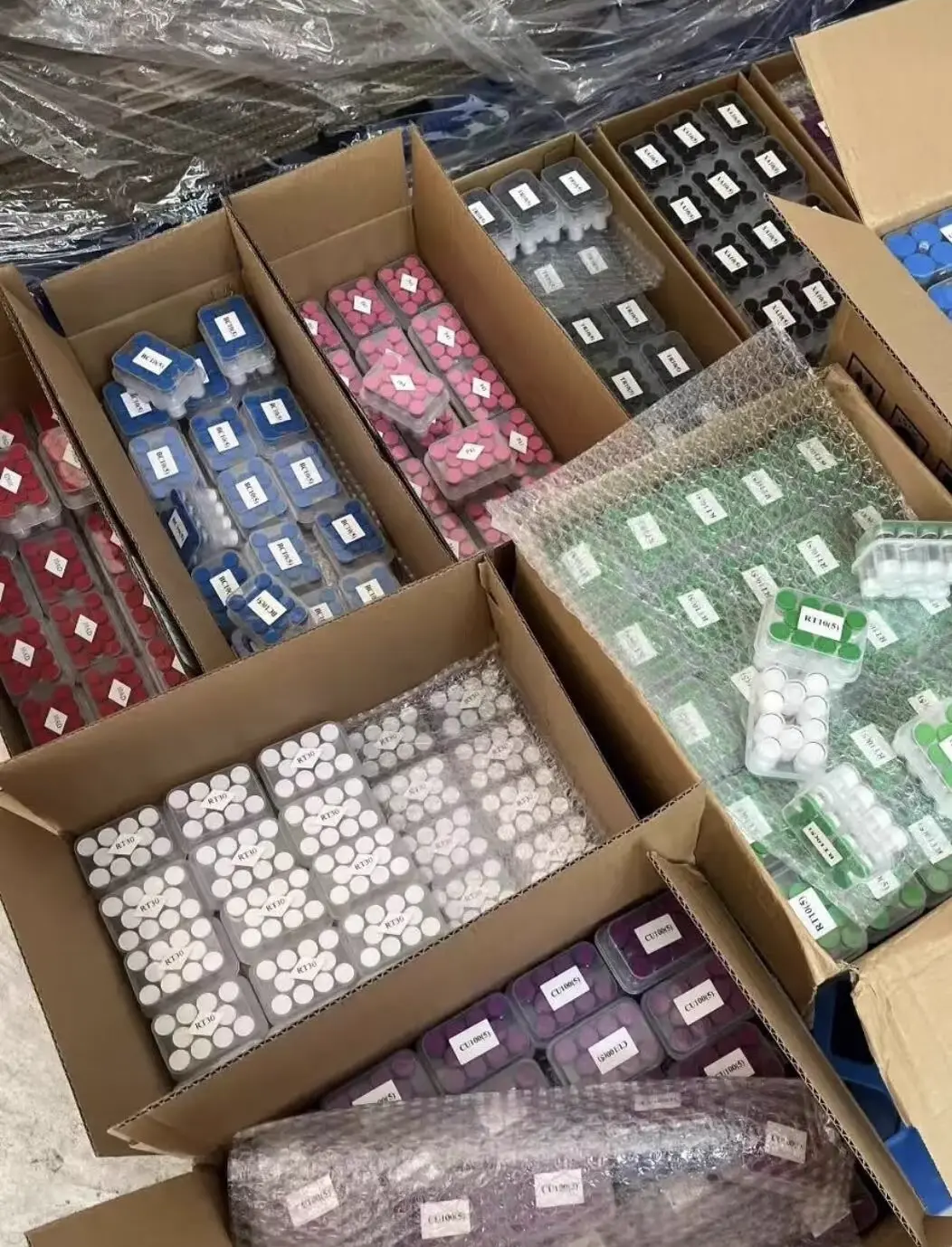
2026-08-21 · 5 min read
Stealth Thermal Packaging: How We Maintain Lyophilized Cake Stability During 7-Day Global Transit
Read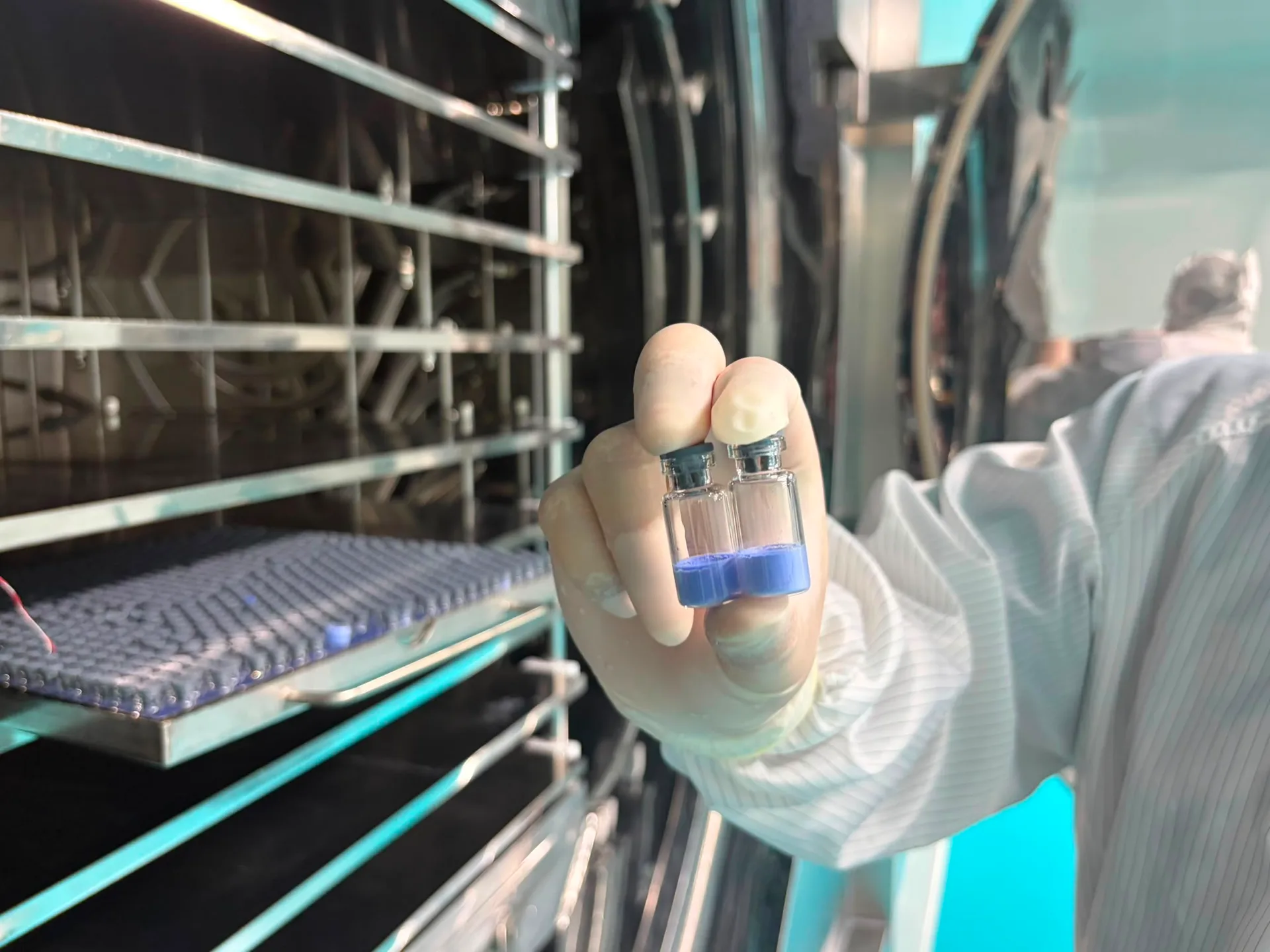
2026-07-15 · 8 min read